
The project
- Product
- Revasi, at revasi.net
- Venues
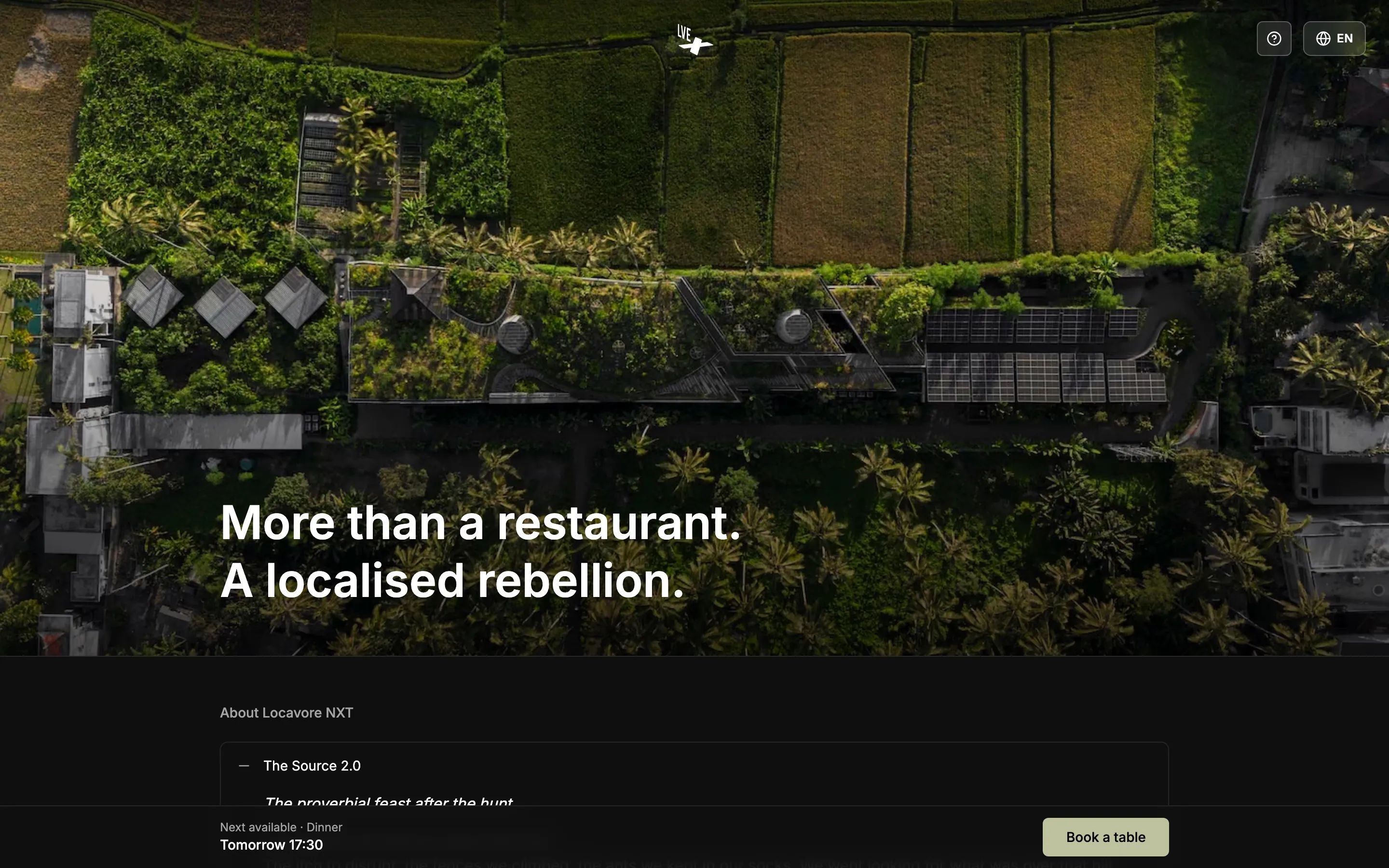
- 10+ in Bali, including Locavore NXT, Barō and Soléa
- Our role
- Co-founder: product design and full-stack engineering
- Timeline
- Development from 2024, live since January 2025
- Stack
- Next.js, Supabase (Postgres + Realtime), Xendit, Moka POS
Key takeaways
- 150,000+ covers have been seated through Revasi since its January 2025 launch, across 10+ high-end venues in Bali.
- At Locavore NXT, 42% of guest bookings include an upgrade, measured over about five months to October 2026.
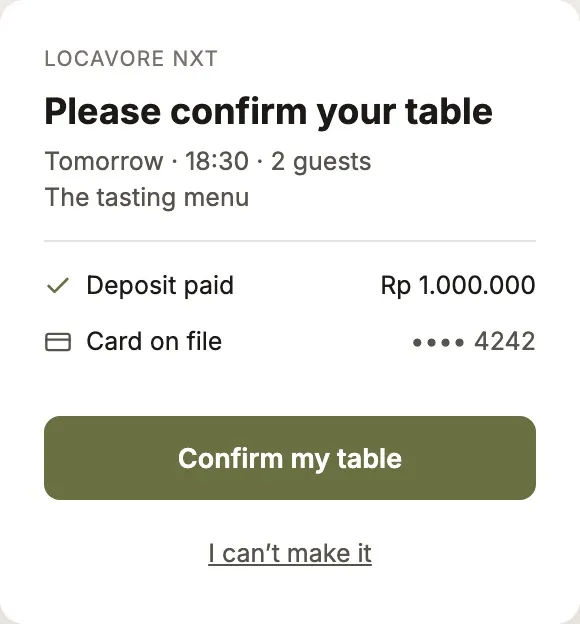
- Card checks, deposits and upgrades happen inside the booking flow, so the venue holds a verified card before the guest arrives.
- Venues pay a flat rate with 0% commission, and a new venue is usually live within a week.
What is Revasi?
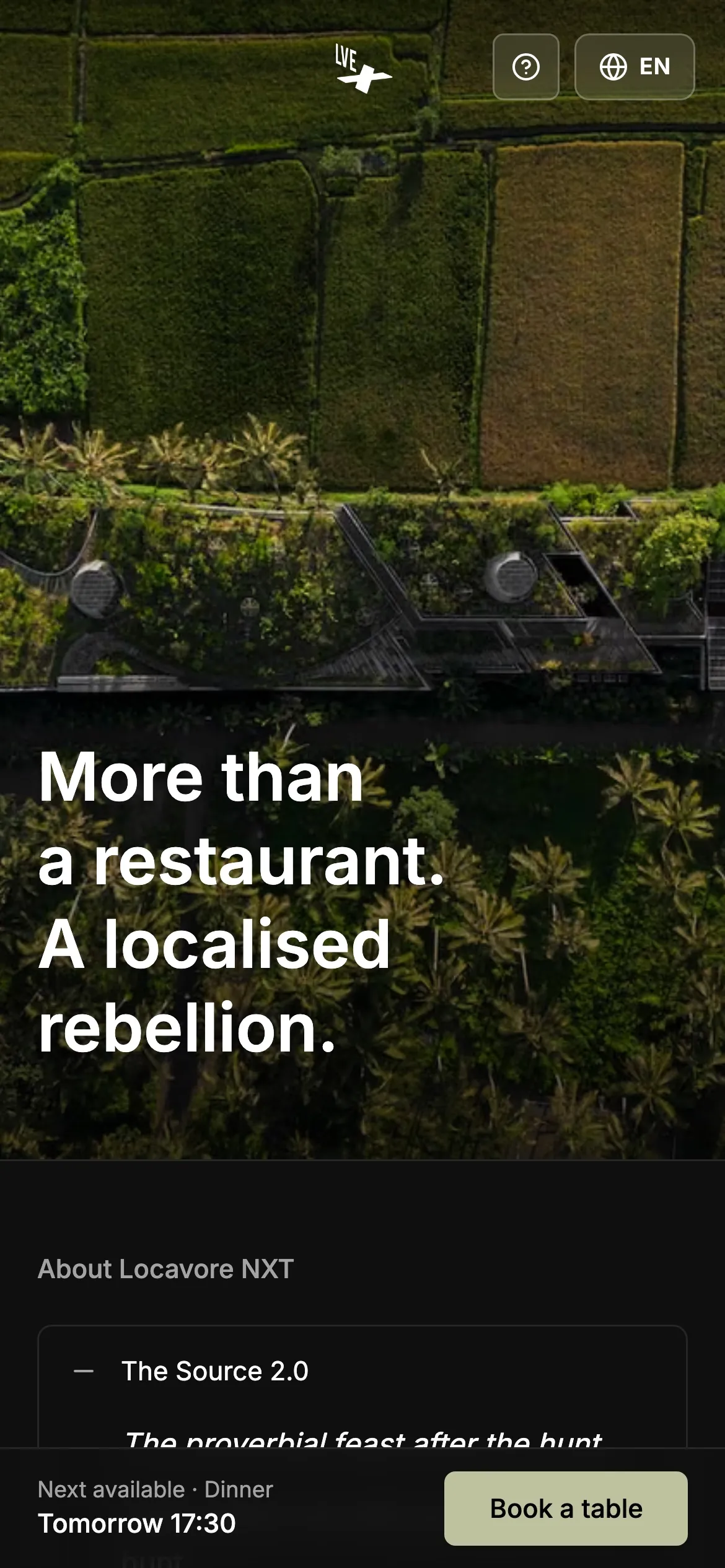
Revasi is a reservation, waitlist and payments platform for high-end venues, and it runs more than 10 of them in Bali. Since launching in January 2025 it has seated more than 150,000 covers. Digics co-founded it with Pandu, and we built it together with Eelke Plasmeijer and Ray Adriansyah, the founders of Locavore Group.
That makes this case study different from a client project. We don't hand Revasi over at launch. We run it, get the support messages on a Saturday night, and ship changes every week. More than 4,800 commits have gone into the platform since March 2024.
Why didn't an off-the-shelf booking tool fit?
Most reservation software assumes a restaurant sells tables in time slots. A venue like Locavore NXT sells experiences: a tasting menu with its own price, seating times and capacity, often booked weeks ahead by guests who've never been to Indonesia. Everything that matters to that venue lives outside the table grid.
The gaps added up quickly:
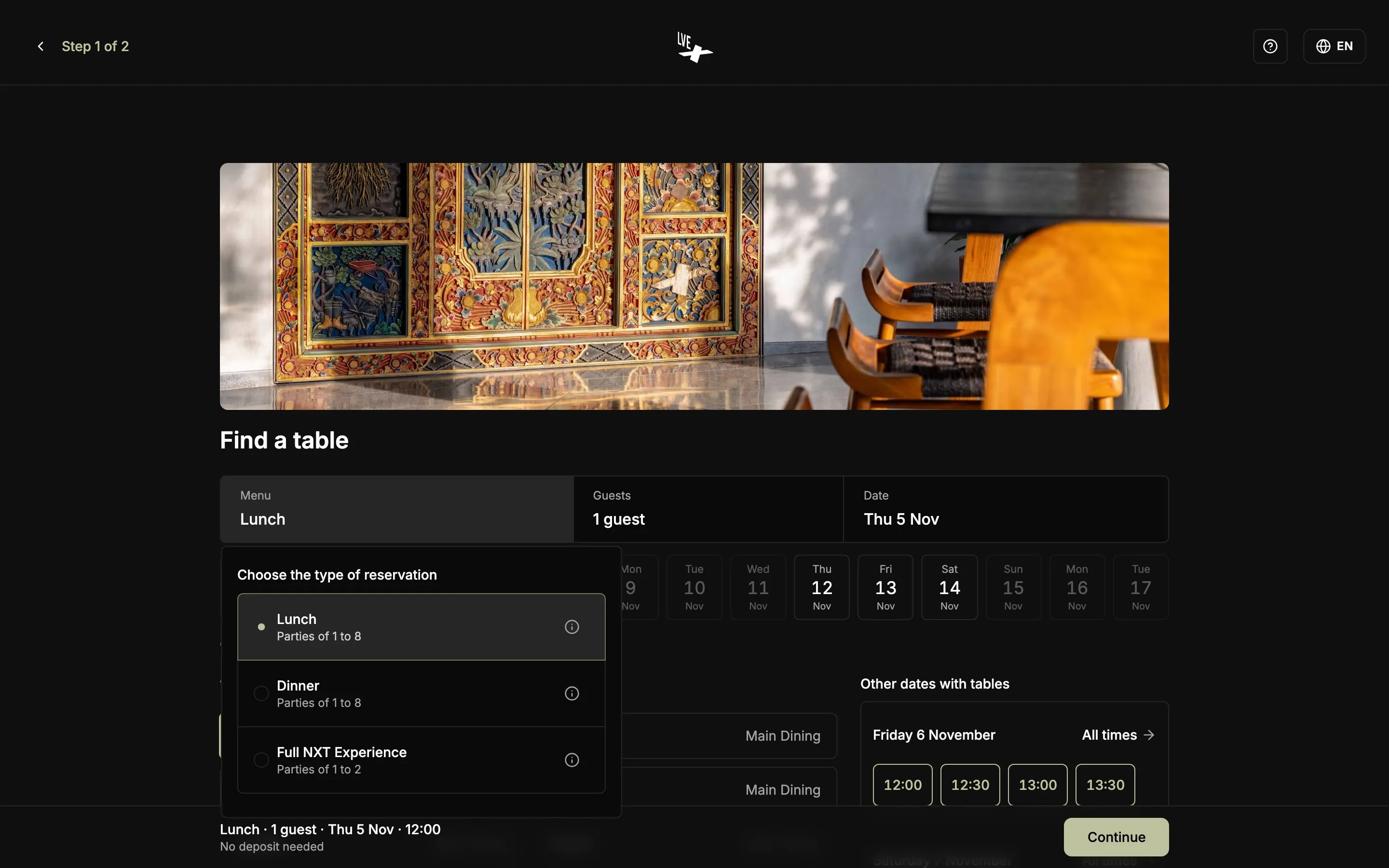
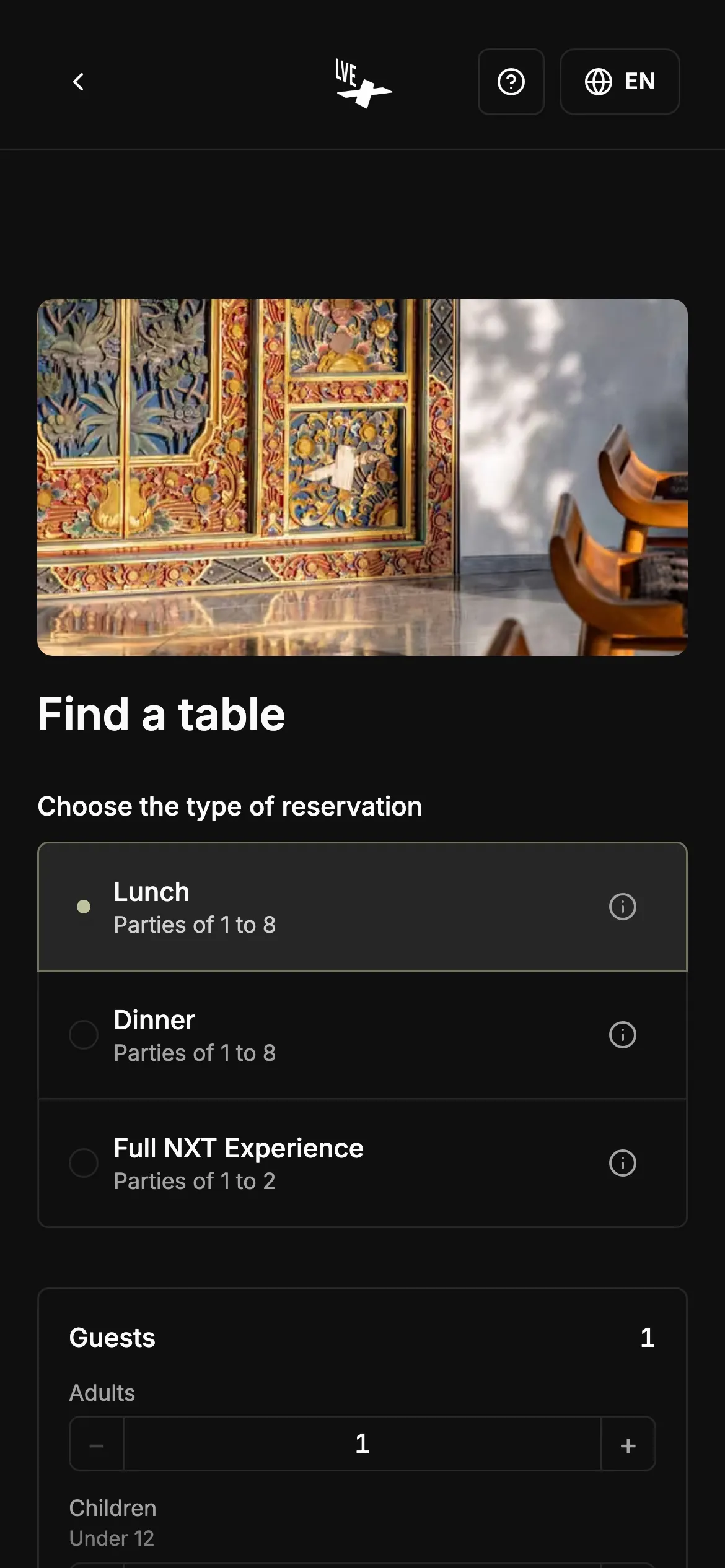
- Experiences, not covers. Each menu, dining area and seating needs its own availability, price and rules.
- Commitment up front. A no-show at a tasting-menu restaurant is lost revenue that can't be resold that night, so the venue needs a verified card and, for some experiences, a deposit.
- International guests. Bookings arrive in many languages and timezones, while service runs on Bali time and payments settle in rupiah.
- Local payments. Guests and venues expect Indonesian methods such as bank-transfer virtual accounts, alongside international cards.
- Revenue at booking. Pairings, private rooms and signed menus sell best when the guest chooses them while booking, not when a host remembers to ask.
There's industry data behind the instinct to ask for commitment. Across 3.7 million reservations at 2,417 restaurants, resOS recorded a 0.80% no-show rate on bookings that required a deposit or card, against 2.47% on bookings that didn't (resOS No-Show Index, 2026). resOS calls that a raw comparison rather than proof, because venues that take deposits differ from those that don't. Revasi doesn't publish a no-show figure of its own.
Each of these gaps can be patched onto a generic tool with notes, manual follow-ups and a separate payment link. For a venue where every booking is an exception, the patches become the job. So we built the platform the other way round, starting from the service.
How does the booking flow work?
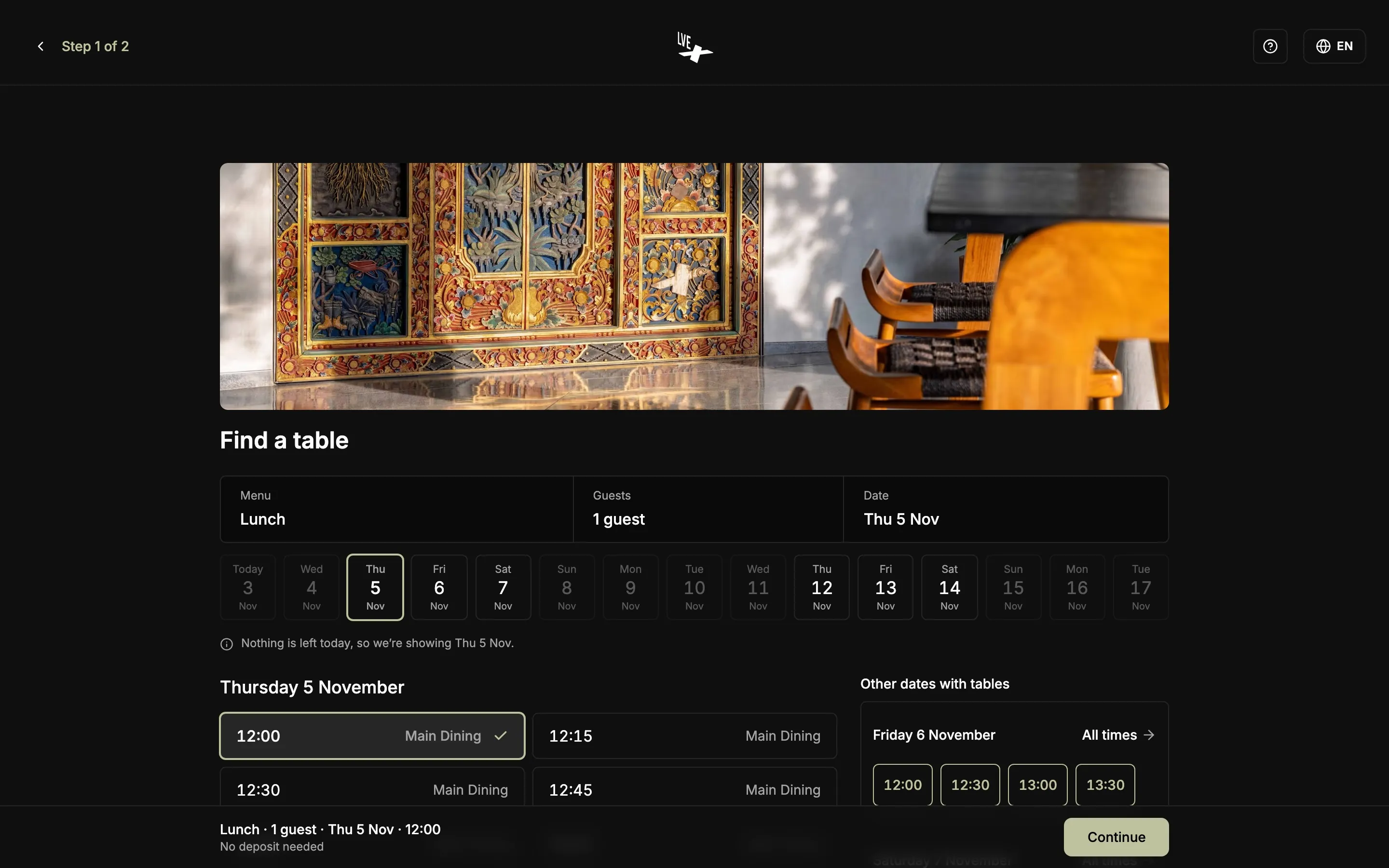
A guest books on the venue's own Revasi page. A single availability engine checks the experience, the dining area and possible table combinations, and can suggest another venue when the first choice is full. If nothing is free, the guest can join a waitlist.
Payment is part of the booking, not a step after it:
- Card verification. The guest's card passes 3-D Secure and is stored as a token with Xendit, so the venue can apply its no-show policy without asking for card details again.
- Deposits per experience. A venue can charge a deposit at booking for the experiences that need one and leave others free to book.
- Bank transfer. Guests who prefer it can pay through an Indonesian virtual account.
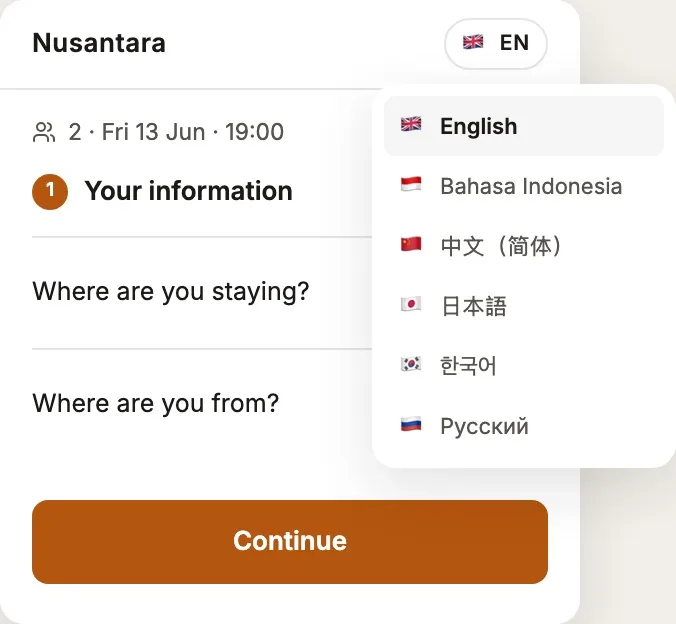
- Seven languages. The booking page speaks English, Indonesian, Simplified and Traditional Chinese, Japanese, Korean and Russian.
- Self-service. Guests manage or cancel their own booking from the confirmation they receive.
How do upgrades work, and what do they add?
Each venue sets up its own upgrades, such as a wine pairing, a private room or a signed menu, and can limit them by experience and party size. Guests see them in the booking flow and choose them themselves. Nobody on the floor has to ask, and the team sees every upgrade before service.
At Locavore NXT, 42% of guest bookings include an upgrade. That figure is measured on production data over about five months to October 2026, and it's one venue's number: other venues on Revasi haven't configured upgrades the same way. We publish it as a share at that venue and nothing wider, because a bigger-sounding version wouldn't be true.
What does the venue team see?
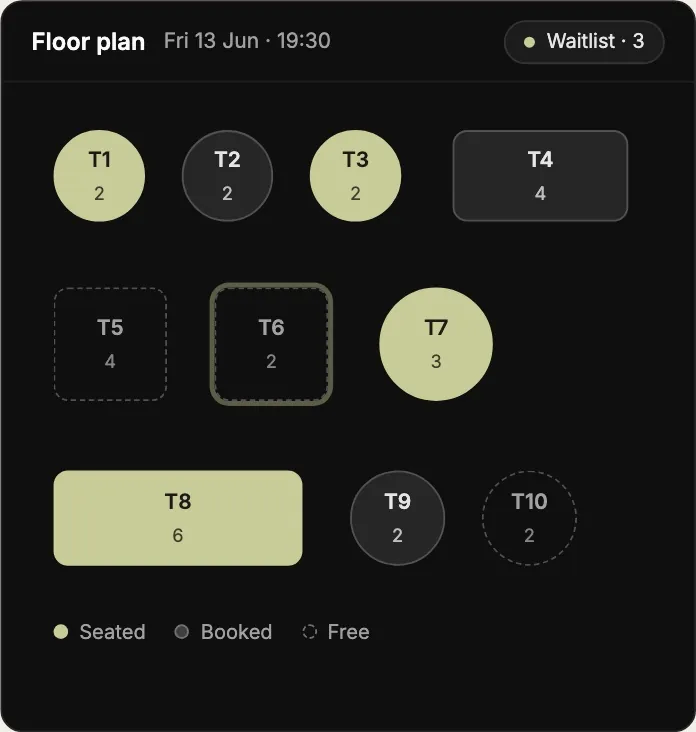
Each venue runs service from its own admin. Reservations appear as a calendar, a floorplan, a timeline and a list, and update live across every screen in the room through Supabase Realtime. Staff who work across several outlets switch between them from one login.
- A guest CRM, so each guest's bookings and notes sit in one profile.
- Conversations with guests over WhatsApp, on a number per outlet, alongside email confirmations.
- Waitlists, analytics and sales for the venue, plus POS data from Moka.
- Twenty-five settings pages, covering availability, floorplan, policies, cross-sell, emails, languages, notifications, promotions, blocked dates and members.
Those settings pages are the reason most venues go live within a week. A new venue's way of running service is usually something it can configure, not something we have to build.
Which technology runs Revasi?
Revasi is a Next.js application on Vercel with Supabase Postgres underneath. We chose boring, well-documented parts and spent the effort on the booking logic, where the hard problems are.
- App: Next.js and React, hosted on Vercel.
- Data: Supabase Postgres with Realtime for the live admin, and pg_cron for scheduled jobs.
- Payments: Xendit for 3-D Secure card checks, stored card tokens, deposits and virtual accounts.
- Integrations: Moka POS, the WhatsApp Cloud API and Resend for email.
- Content and monitoring: Sanity for marketing content, PostHog for product analytics and Sentry for errors.
What did we learn building it?
The biggest lesson is that the booking flow is also where revenue happens. Card checks, deposits and upgrades all work better as part of the flow the guest is already in than as follow-up emails.
Second, local payments aren't a detail. In Indonesia that means rupiah, local card acquiring and bank-transfer virtual accounts, and choosing a provider that handles all three shaped the whole payment design. Third, depth beats breadth. Revasi is built for venues whose service is complicated, and the settings pages are where that depth lives. If you run a straightforward single restaurant, a standard booking tool is often the better choice, and we'll tell you so.
Revasi in numbers
These are the figures Revasi publishes, each with the scope it was measured over.
Source: Revasi production data, checked by the founders. Revasi reports covers (guests seated), not reservation counts.
Questions
Development started in March 2024 and Revasi went live in January 2025, about ten months later. It has been in continuous development since, with more than 4,800 commits. A focused reservation system for one venue takes far less: typically 4–6 weeks for an integration and 8–16 weeks for a full platform.
Guests verify their card with 3-D Secure when they book, and the card is stored securely with Xendit. Venues can take a deposit for specific experiences and charge a no-show fee under their own policy, without chasing the guest for card details afterwards.
Payments run through Xendit, which covers international cards with 3-D Secure, stored card tokens, deposits and Indonesian bank-transfer virtual accounts. POS data comes from Moka. Read more about how we approach POS and booking integrations.
Revasi competes with platforms like SevenRooms and ResDiary at the premium end, but it's narrower and deeper: it's built for high-end venues with complicated service, and it charges 0% commission. Every current Revasi venue is in Bali.
Yes. If you run a high-end venue in Bali, Revasi itself may be the right answer. Elsewhere, or if your needs are unusual, we build custom reservation systems on the same experience. Integrations start from €3,000, and we'll tell you on the first call if an off-the-shelf tool is the better fit.