


The project
- Client
- Nusantara, part of Locavore Group, Ubud
- Website
- restaurantnusantara.com
- Our role
- Design system, build and content model, with Panduu
- Timeline
- July to September 2026
- Stack
- Astro, React, Tailwind, GSAP, Vercel
- Services
- Web design, hospitality software
Key takeaways
- Nusantara went from one page on its group's site to its own six-page website in about ten weeks.
- The menu is HTML built from one data file, so search engines can read every dish and its region.
- Every reserve button goes straight to Nusantara's Revasi booking page, and the structured data points there too.
- The live homepage scores 100 for SEO and best practices in Lighthouse, with the largest paint at 1.7 s on throttled mobile.
What is the Nusantara website?
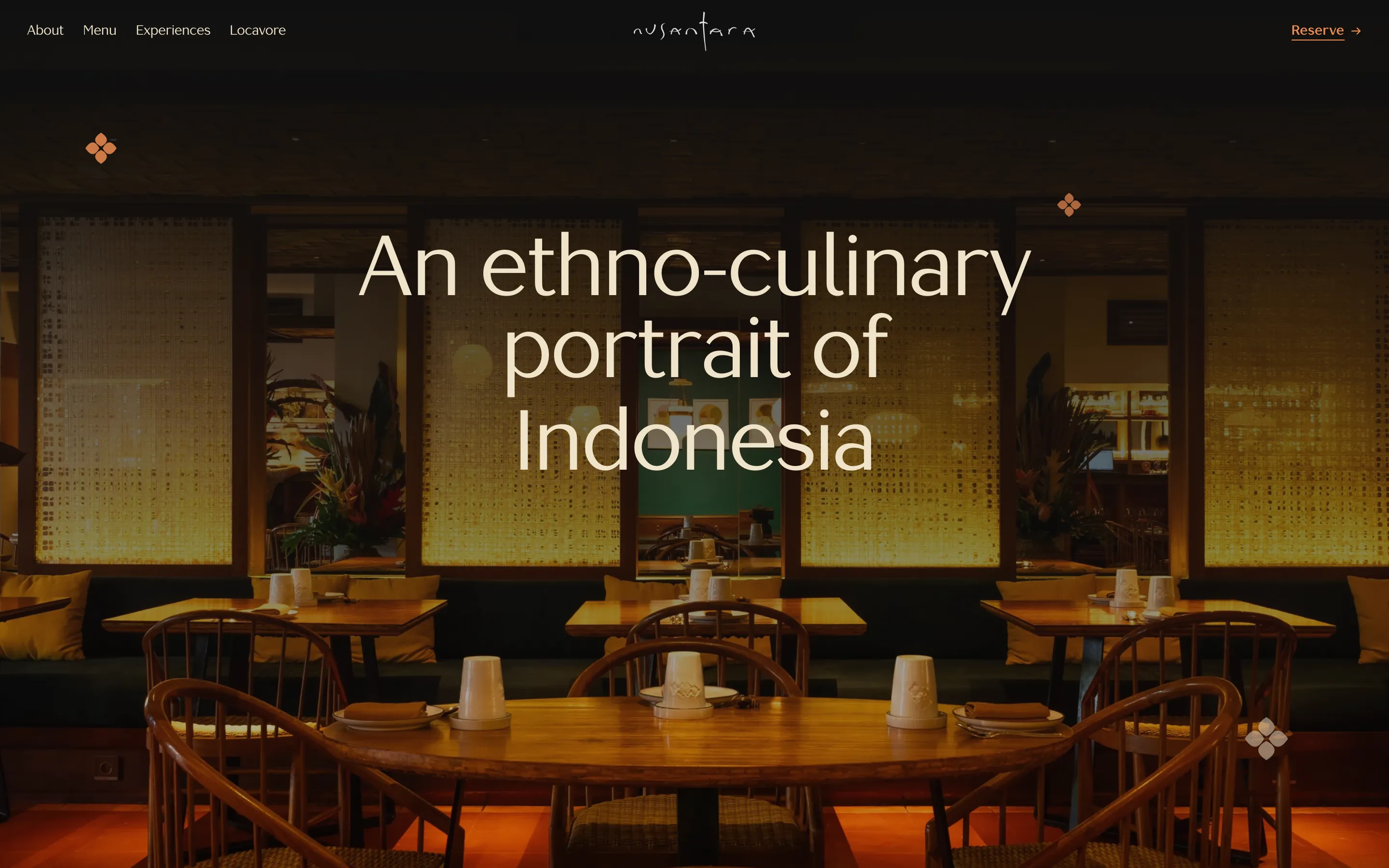
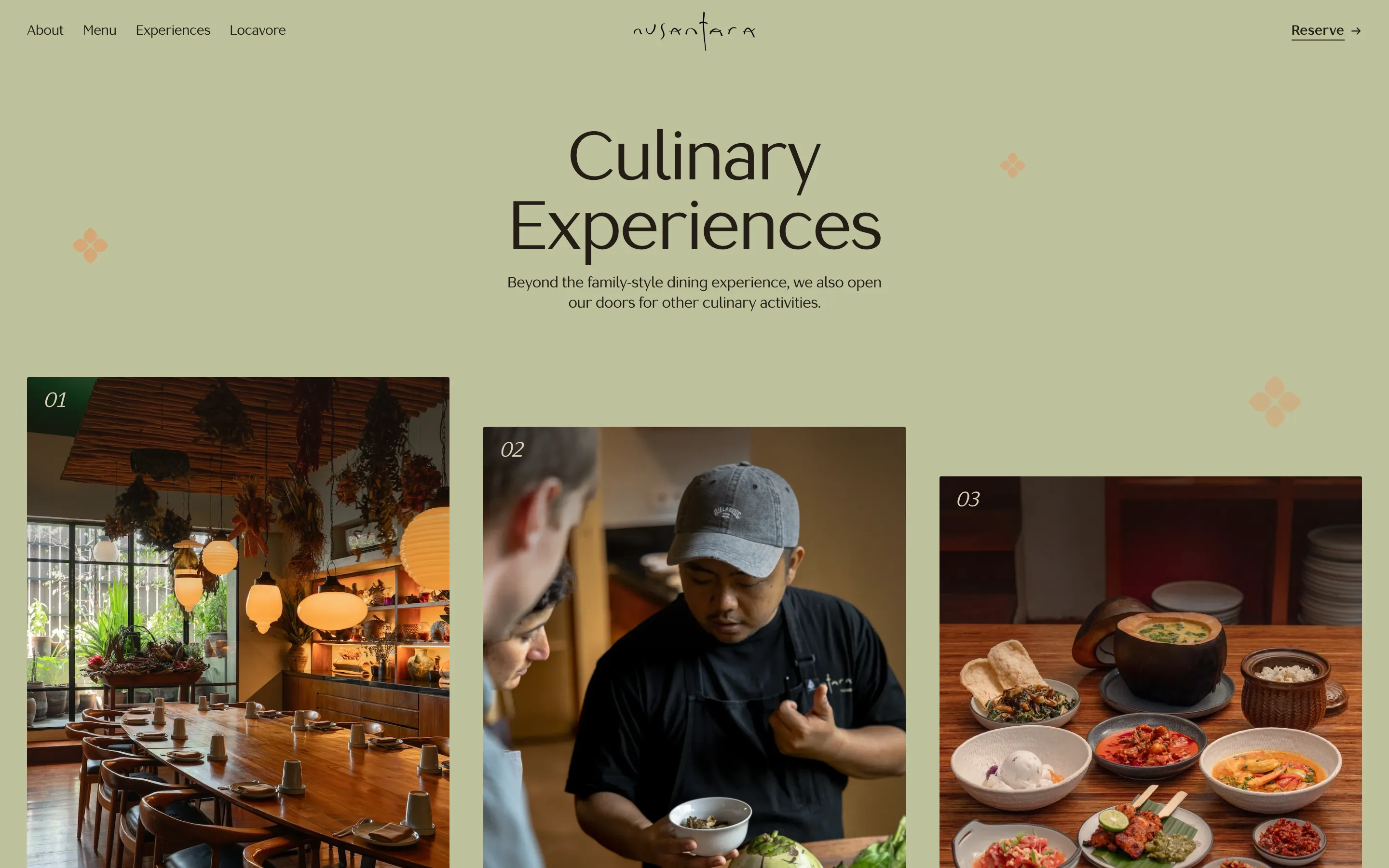
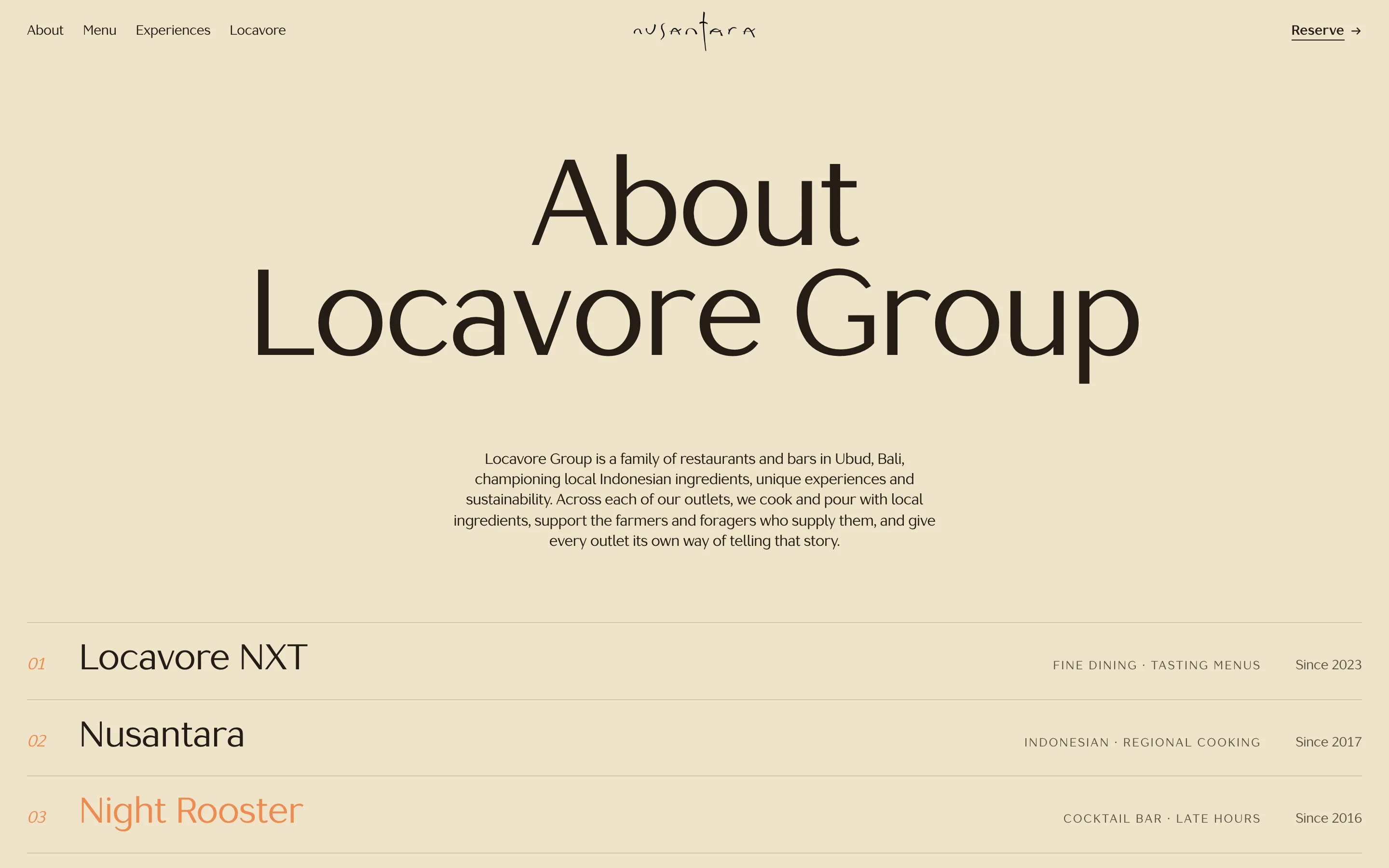
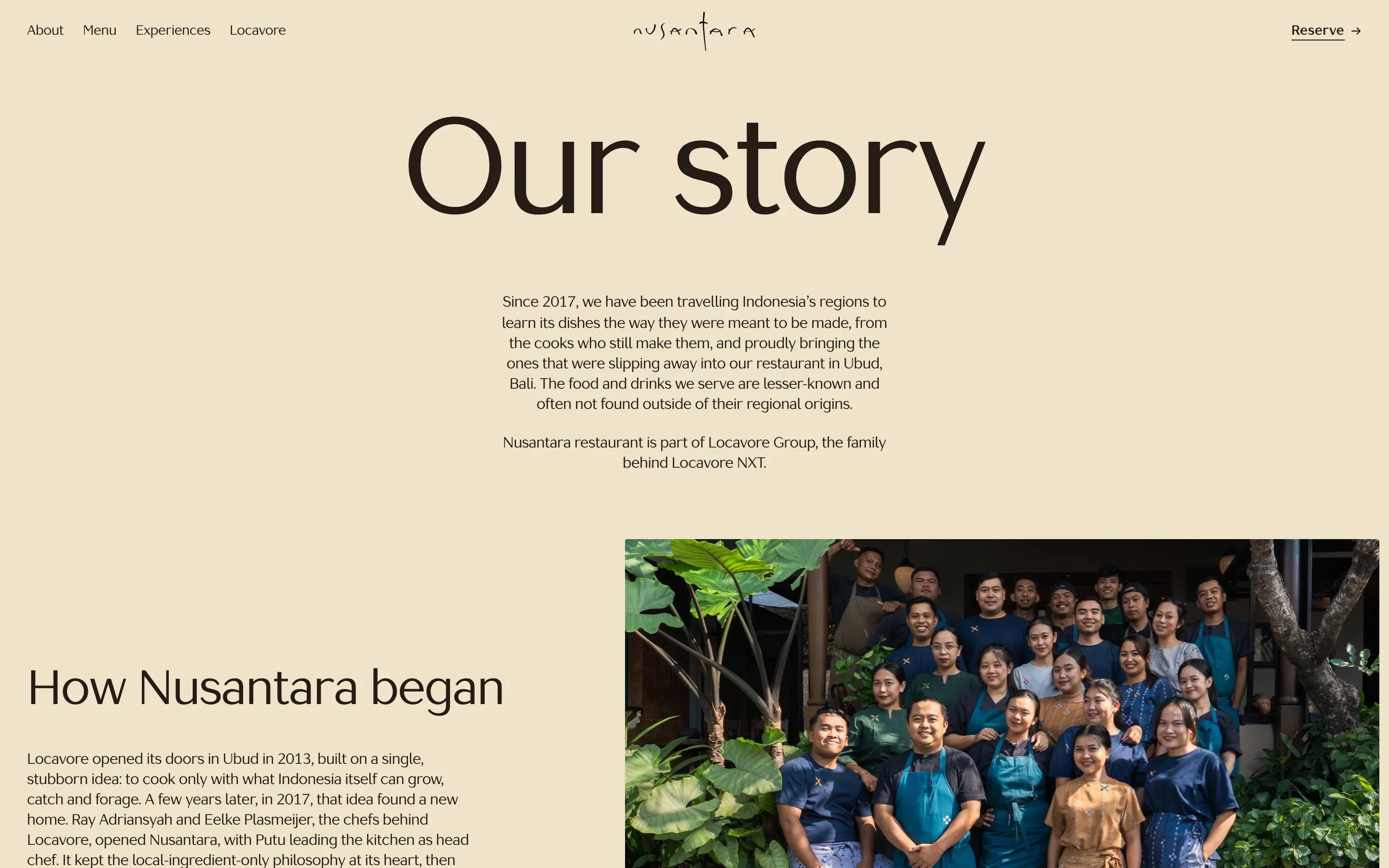
It's the first website of Nusantara's own: a six-page site at restaurantnusantara.com for Locavore Group's Indonesian restaurant in Ubud, Bali. It covers the home page, the menu, the restaurant's experiences, its story, the Locavore Group family and a privacy page. Digics built it together with Panduu between July and September 2026.
Nusantara has been open since 2017. Its kitchen travels Indonesia's regions to cook dishes the way they're made where they come from, and the site had to carry that story without getting in the way of the two things most visitors want: the menu and a table.
What did Nusantara have before?
No website of its own. Archived copies show restaurantnusantara.com forwarding to the group's site for years, and by mid-2025 the domain showed a parking page (Wayback Machine, 2025). The restaurant's web presence was a single page on the Locavore NXT website.
That page did one job well, sending people to book. Everything else was thin:
- A flipbook menu. The menu lived in an embedded flipbook viewer, so the dishes weren't text on the page for search engines to read.
- No prices or detail. Private dining and workshops had a short blurb each, without prices or what was included.
- No identity of its own. Search engines saw a section of another restaurant's site, not a restaurant with its own address, hours and menu.
Why does one restaurant in a group need its own site?
Because people search for the restaurant, not the group. Someone planning dinner in Ubud types "Nusantara Ubud" or "Indonesian restaurant Ubud", and the result that answers best is a page that's entirely about Nusantara, with its menu, hours and a way to book.
A dedicated domain also gives Google one clear entity to connect with the restaurant's Google Business Profile. We cover why that link matters in our guide to Google Business Profile for restaurants.
How is the menu built?
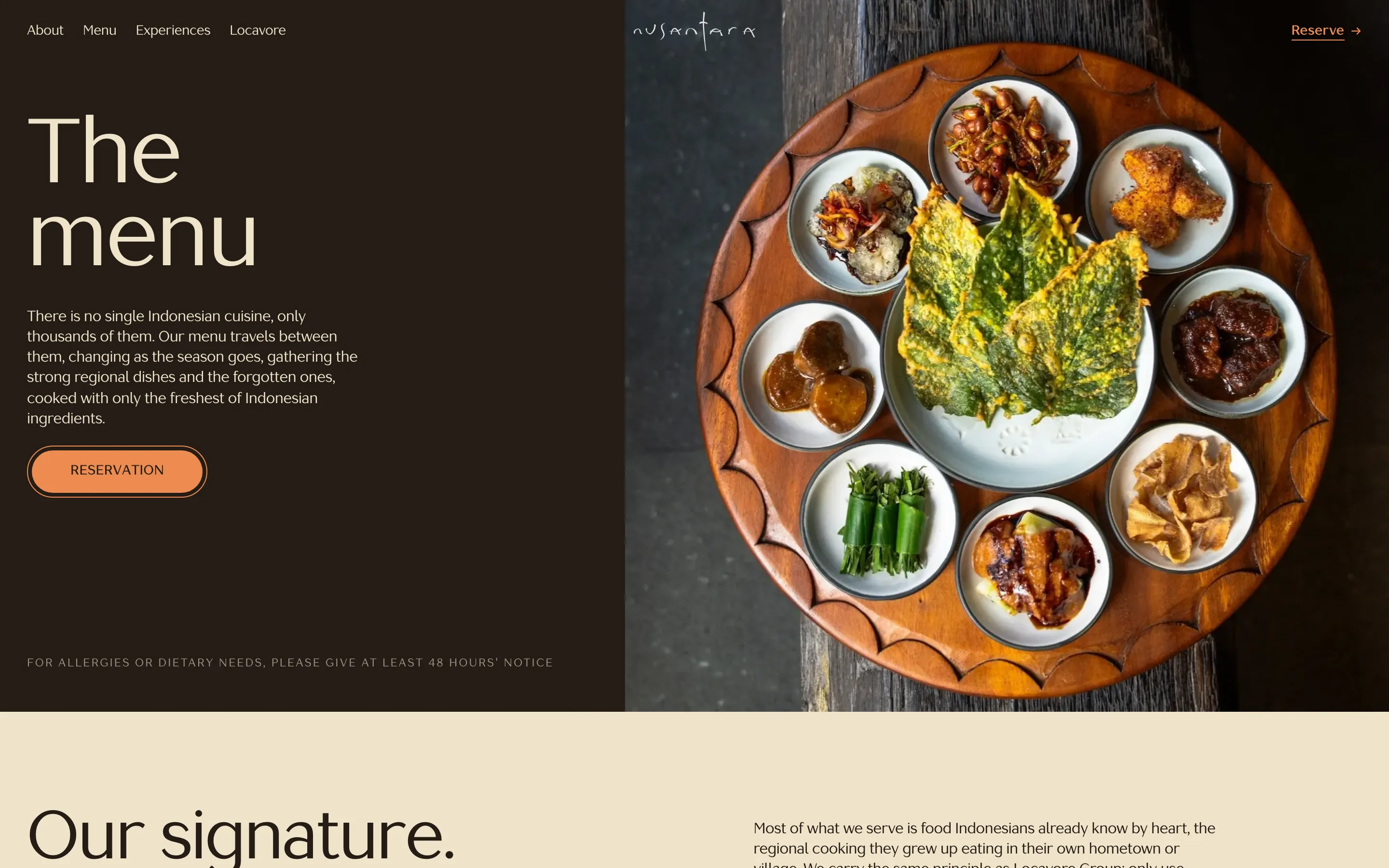
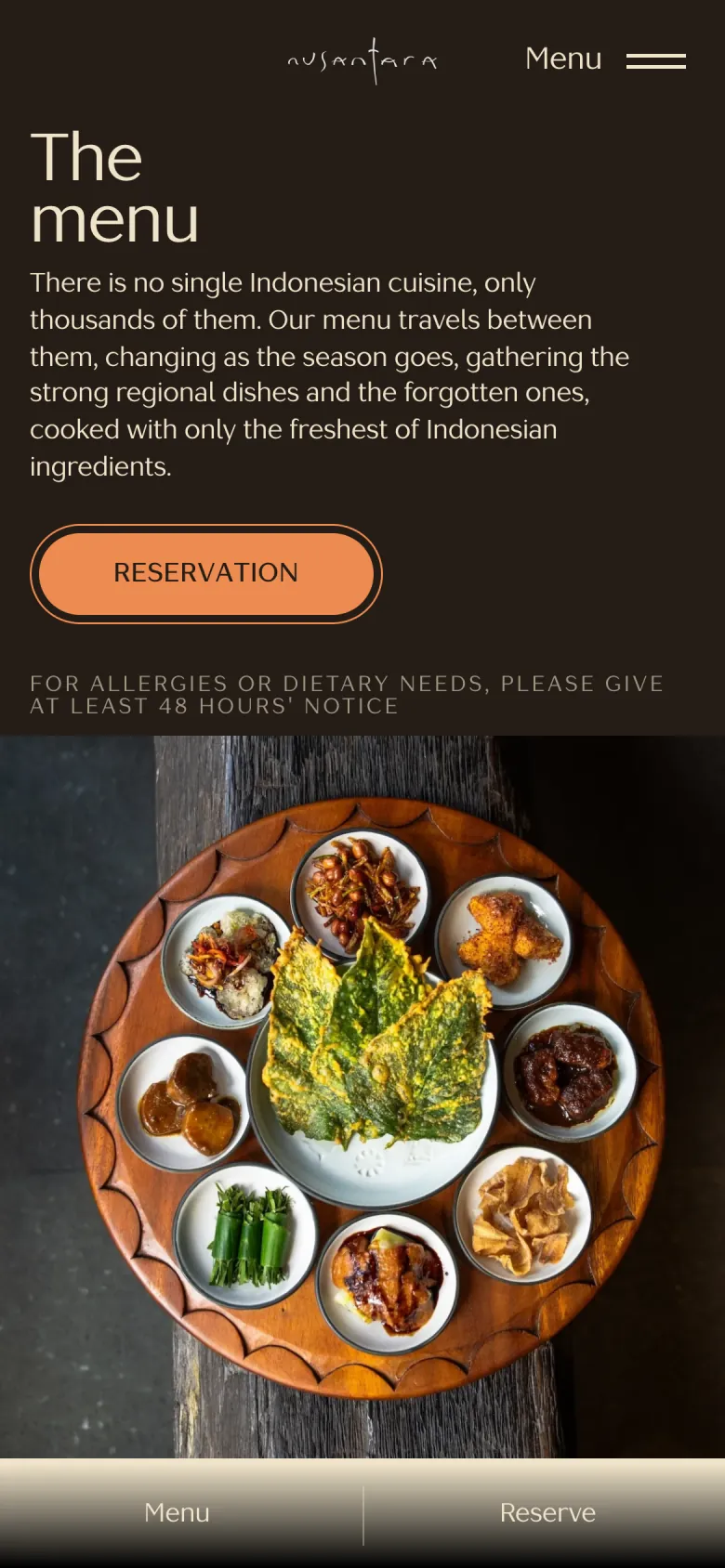
The menu is written as data, not as a design. Each dish sits in one typed data file, transcribed from the printed menu card, with its name, description and the Indonesian region it comes from. The menu page renders from that file, and so does the price range in the site's structured data, so the two can't disagree.
There's no content management system. Menu changes are an edit to that file and a deploy, which keeps one source for the page and the search data. For a menu that changes with the season rather than every day, that trade-off holds.
How do guests book a table?
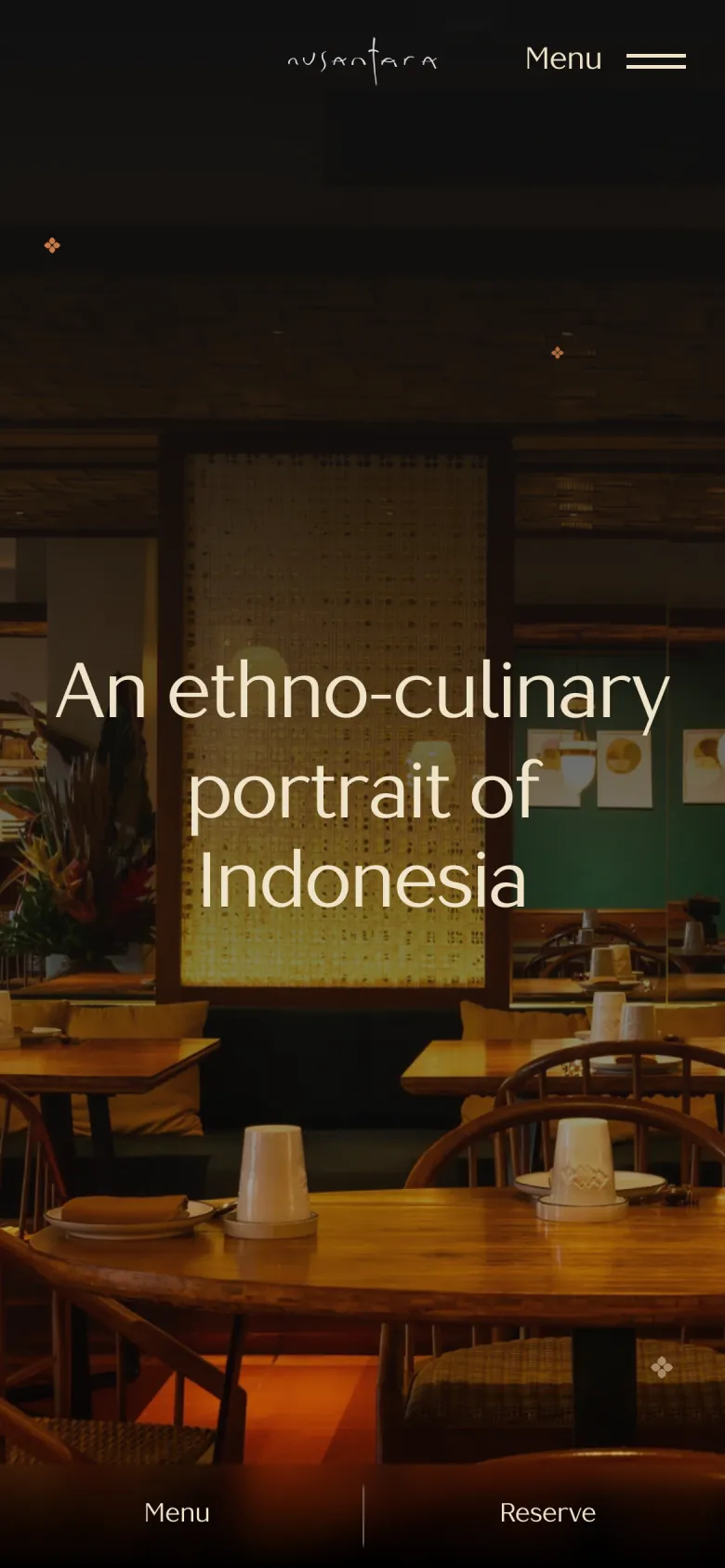
Every reserve button on the site goes to the same place: Nusantara's booking page on Revasi, the reservation platform we co-built. On a phone, Menu and Reserve sit pinned to the bottom of the screen, so a table is one tap away.
The site's Restaurant structured data names that booking page as where reservations are accepted. Private dining and the cooking classes are different: they need a conversation first, so their buttons open WhatsApp or email with an enquiry already drafted.
How does the design carry the brand?
The site uses Lagu Sans throughout, self-hosted in five weights, on a palette taken from the restaurant: warm beige, near-black ink, sage and a terracotta accent. Large photography does most of the talking, with the food and the room given full width.
Motion is there but stays quiet. Sections ease in as you scroll, and visitors who've asked their device to reduce motion get the same pages without it.
What does Google see?
A restaurant, described in its own words. Each page has its own title, description and canonical URL, a social preview, and a place in the site's sitemap. On top of that, structured data tells search engines the essentials directly:
- Restaurant details: address, map coordinates, opening hours and price range.
- Menu and booking: links to the menu page and to the Revasi booking page.
- Its family: Locavore Group as the parent organisation, plus the restaurant's social profiles.
Analytics only load after a visitor agrees to them, and the privacy page lists exactly what's stored. In a Lighthouse run on the live homepage in November 2026, the site scored 100 for SEO and best practices and 95 for accessibility, on both mobile and desktop.
What would we improve next?
Three things, all small. Booking links don't yet carry campaign tags, so Revasi can't tell a booking that came from the website from one that came from Instagram, and adding them is the quickest win. The site is English-only, and many of Nusantara's guests would read it more comfortably in Indonesian. And the last accessibility points Lighthouse flags are footer links that need a larger tap target.
Nusantara in numbers
Lab measurements of the live homepage, taken on 3 November 2026. Google doesn't have field data from real visitors for the site yet.
Source: Lighthouse and a Chrome DevTools performance trace run by Digics on restaurantnusantara.com. Google's guidance treats a largest paint under 2.5 s and a layout shift under 0.1 as good.
Questions
About ten weeks. The first commit was on 6 July 2026 and the site launched on restaurantnusantara.com in September 2026.
Digics and Panduu built it together, and the site's footer credits both. The restaurant confirmed the menu and the venue details before they went live.
Yes. Every reserve button goes to Nusantara's booking page on Revasi, the reservation platform we co-built, where guests choose a date and time and book.
Not directly. The menu lives in a data file in the site's code, so changes go through us. That keeps one source for the menu page and the price range search engines see, which matters more for a seasonal menu than self-service editing does.
It depends on the number of pages, the content and the integrations. Our guide to restaurant website costs in Bali breaks down what drives the price, in our own euro rates.