Menu
Close
46% of all Google searches have local intent (BrightLocal, 2025), and 84% of mobile “near me” searches are about food (SOCi, 2024). In Bali that matters more than almost anywhere: your guests arrived four days ago, they do not know the island, and Google Maps is the only thing they trust to pick tonight’s table.
Key takeaways
In most cities a restaurant builds a base of regulars who return without searching. Bali does not work that way. A large share of your covers come from people who landed this week, are staying for eight days, and will choose every single meal through a phone. There is no word of mouth to fall back on and no habit to inherit. Every night you are re-competing for the same guest from scratch.
That inverts the usual weighting. Prominence — the signal that normally rewards venues with long local reputations — matters less here, because the searcher has no local knowledge to draw on. Relevance and reviews carry the decision instead, and both are things you can move deliberately within a few weeks.
The second thing that makes Bali distinct is language. Your searchers are Australian, European, Singaporean and Indonesian, searching in English and Bahasa Indonesia against the same profile. One Google Business Profile has to answer both, and your review replies are read by the next guest as much as by the person who wrote them.
Almost nobody searches “restaurant Bali” with intent to book. They search where they are staying. Canggu, Pererenan, Berawa, Seminyak, Petitenget, Umalas, Ubud, Sanur, Uluwatu and Bingin all behave as separate markets with separate searchers, and a guest in Sanur will not drive ninety minutes to Canggu for dinner.
This is where most of the island leaves money on the table. Venues describe themselves as being “in Bali” and compete against the entire island, instead of owning the two-kilometre radius their guests actually search. Put your area name in the page title, the H1, the profile description and the directions section, and you are competing against a handful of venues rather than thousands.
83% of consumers read Google reviews for local businesses (BrightLocal, 2025). In a market of transient guests that number is effectively your whole reputation, because nothing else about you is known. A venue with 400 reviews at 4.6 will beat a better restaurant with 60 reviews at 4.8, every time, because the guest is buying certainty rather than quality.
Replying matters more than collecting. 88% of consumers would consider a business that answers all its reviews, against 47% for one that answers none (BrightLocal, 2025). Answer in the language the review was written in. On an island where a third of the reviews are not in English, that is a visible signal that someone is actually behind the account.
“Your guest has been on the island four days. Your reviews are the only thing they know about you.”
Ask at the right moment: after dessert lands, not with the bill. A QR code on the table works, and so does asking out loud. What does not work is buying reviews, which Bali has a visible problem with — clusters of five-star reviews posted in a single week are detectable by Google and obvious to guests reading them in sequence.
Restaurants with 100+ photos on their profile receive 520% more calls than the average (Restroworks via Google, 2024). Bali makes this easier than anywhere: the light is good, the rooms are photogenic, and your guests are already shooting the food. The gap is that most venues upload interiors and nothing else.
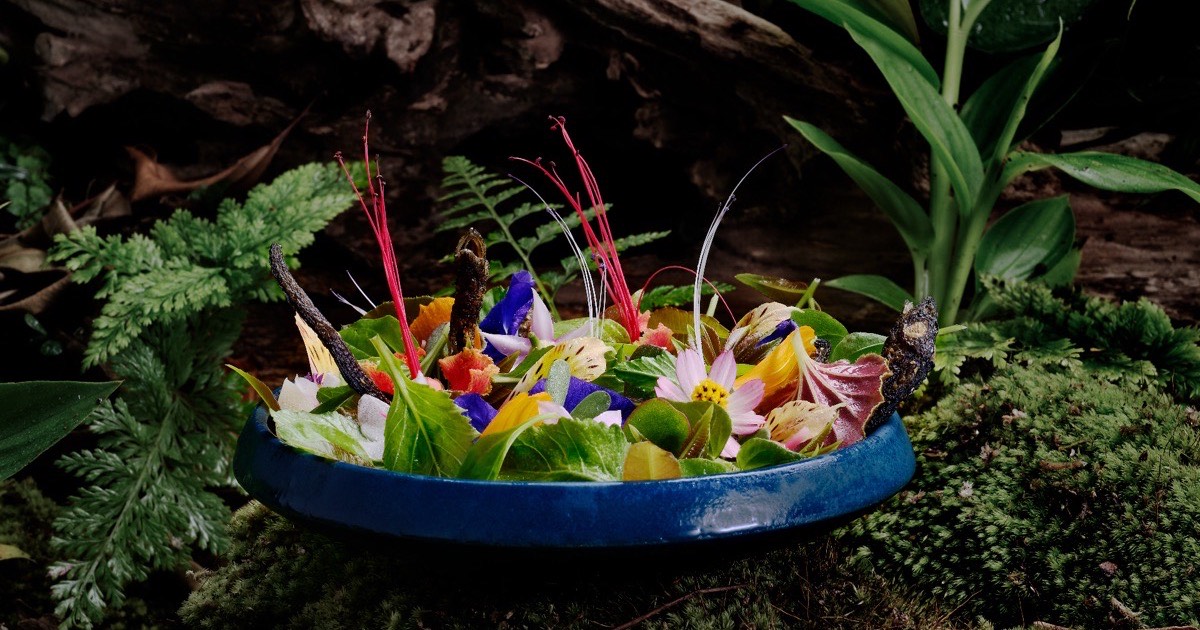
What actually converts here is context. Guests are choosing an evening, not a dish. Photograph the approach down the gang, the room at golden hour, the rice field or the break if you have a view, and the seating you actually want booked. Building the Revasi platform and its imagery for Locavore NXT in Ubud, what stood out was how much of the decision happened before anyone reached the menu.
If your site takes longer than three seconds on a phone, 53% of visitors leave (Google / Think with Google, 2024). Bali makes that harder than a European city would: connectivity across Canggu and the Bukit is inconsistent, and a guest deciding between two venues on a scooter stop is not waiting for a heavy theme to finish loading.
The practical target is a menu that opens without a click, a reservation button above the fold, a tappable phone number, and a WhatsApp link — which in Indonesia is the channel guests will actually use over a contact form. Everything else is optional. A stock theme loading a carousel, three font families and a chat widget will lose to a plain fast page every time.
The full argument for why templates struggle here is in why a template website is costing your restaurant bookings.
Ranking well and then handing the booking to a marketplace means paying a commission on a guest you earned. It also means the guest relationship, the data and the ability to follow up all sit with someone else.
Direct booking is the point of the exercise. Across the venues running on the platform we built, more than 50,000 reservations a year go through direct — with card authorisation at the point of booking, which more than halved no-shows against the previous SaaS setup. In a market where a large share of bookings are made by people who may change plans, that mechanism is worth more than the ranking that produced the booking.
Frequently asked questions
Optimise for your area rather than the island: a complete, verified profile with the right category, reviews collected and answered consistently, and the area name used properly across your site and profile. Position #1 in the local pack alone takes 17.8% of clicks.
English carries most of the booking volume for tourist-facing venues, but Bahasa Indonesia matters for staff-facing pages, local guests and domestic tourism, which is a larger share of the market than most owners assume. Match your review replies to the language of the review either way.
Google does not discount a review for being written by a visitor. What it does read is pattern: a steady stream of reviews over months looks legitimate, while forty five-star reviews in one week does not, and Bali has enough of the latter that the filter is well trained.
Canggu specifically, and ideally Berawa or Pererenan within it. Nobody books dinner by searching an entire island. Area-level searches have less competition and far higher intent, because the person searching is already nearby.
Our builds run €1,800 to €4,500 for a restaurant, quoted in euros because we are an Amsterdam studio. Local Bali web shops will quote less. The breakdown of what each budget buys is in our Bali pricing article.
