

The project
- Client
- Into the Wild, hosted by Locavore NXT, Bali
- Website
- intothewild.id
- Our role
- Design and build, with Panduu
- Live since
- June 2026
- Stack
- Next.js, React, Vercel
- Services
- Web design
Key takeaways
- One site carries both basecamps, with the upcoming edition and the past one side by side on the homepage.
- Each audience gets its own page: guests, sponsors, press and the chef community.
- Ticket buttons open WhatsApp with the booking message already written, naming the event.
- The live homepage scores 100 for SEO and best practices in Lighthouse; its 33 MB hero video is the first thing to fix.
What is the Into the Wild website?
It's the home of Into the Wild, Locavore NXT's annual creative basecamp in Bali, at intothewild.id. Over three to four days, chefs and bartenders from across Asia-Pacific cook, forage, run workshops and talk shop, and the public gets in through dinners and bar takeovers. Digics built the site together with Panduu, and it went live in June 2026.
The event now has two editions: a Culinary Basecamp, whose fourth edition ran from 18 to 20 September 2026, and a Liquid Basecamp for bartenders, running from 13 to 15 November 2026. The site has to serve both without turning into two sites.
Who is the site for?
Four groups, each looking for something different, so the site gives each one a page of its own:
- Guests: the programme and the tickets page, with every public event's date, time and venue.
- Sponsors: a sponsors page that shows who supports each basecamp and names a contact for the culinary and the liquid edition.
- Press: a contact page that sends press, tickets and sponsorship to different people, so nobody's enquiry lands in the wrong inbox.
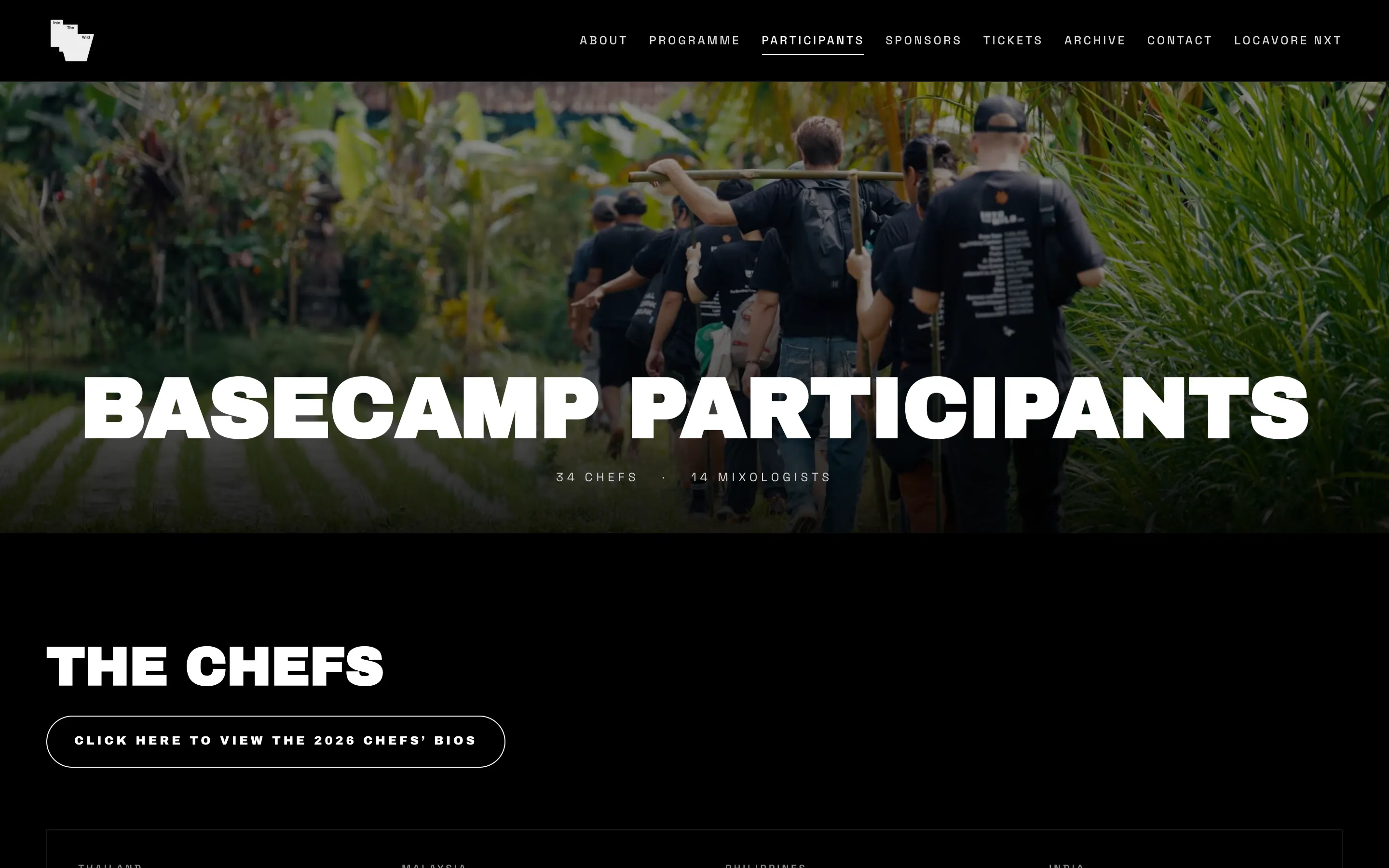
- The community: a participants page listing 34 chefs and 14 bartenders by country, with the editions each one joined, and an archive of recap videos and podcasts.
How does one site handle two editions?
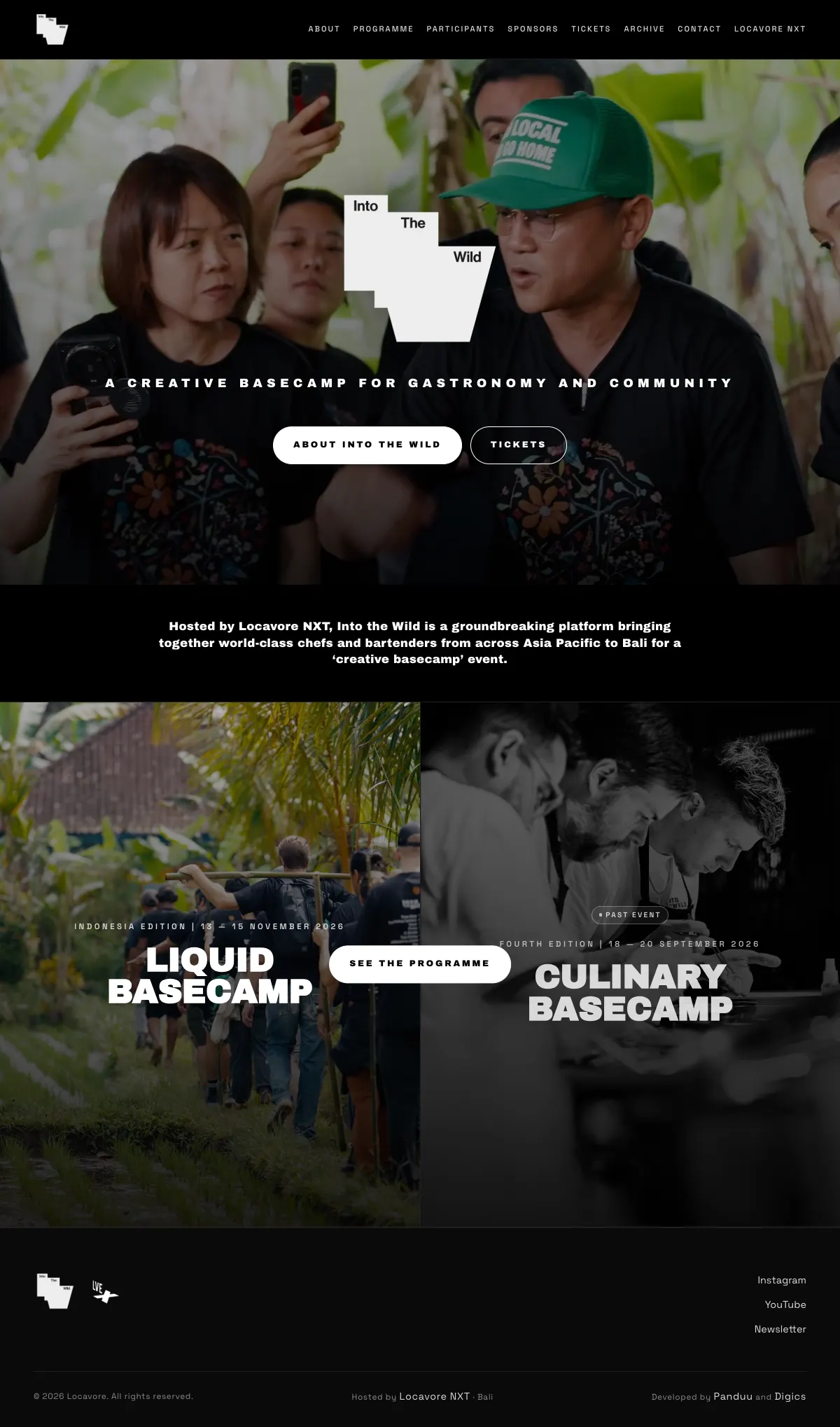
The homepage splits in two. The Liquid Basecamp and the Culinary Basecamp sit side by side, each with its edition and dates, and the one that has already happened is marked as a past event. A single programme button sits between them.
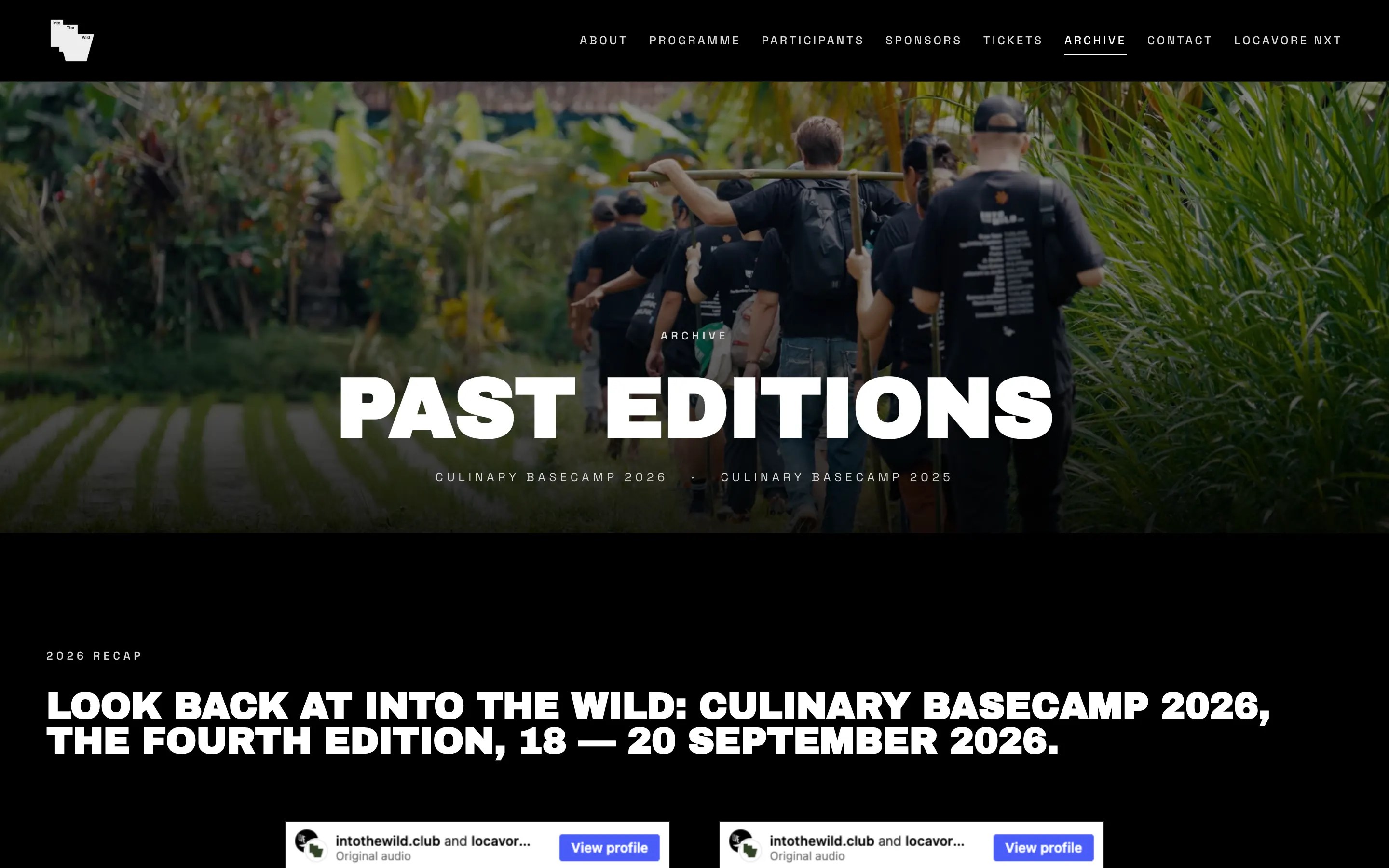
Past editions move to the archive, which collects the recap videos from Instagram and the 'Campfire Live!' podcasts on YouTube. That gives the next edition's sponsors and guests something to look at besides a promise.
How do guests get a ticket?
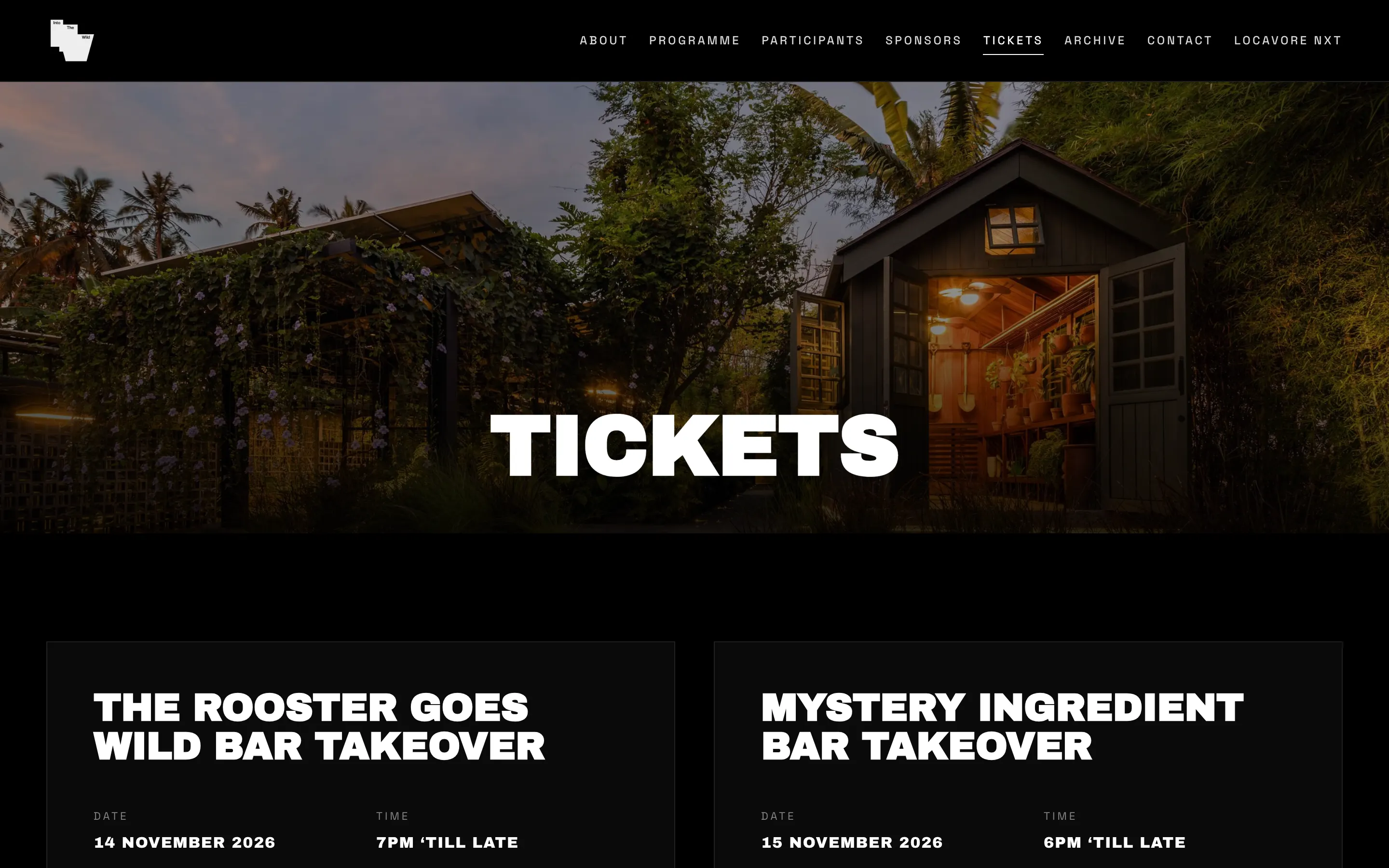
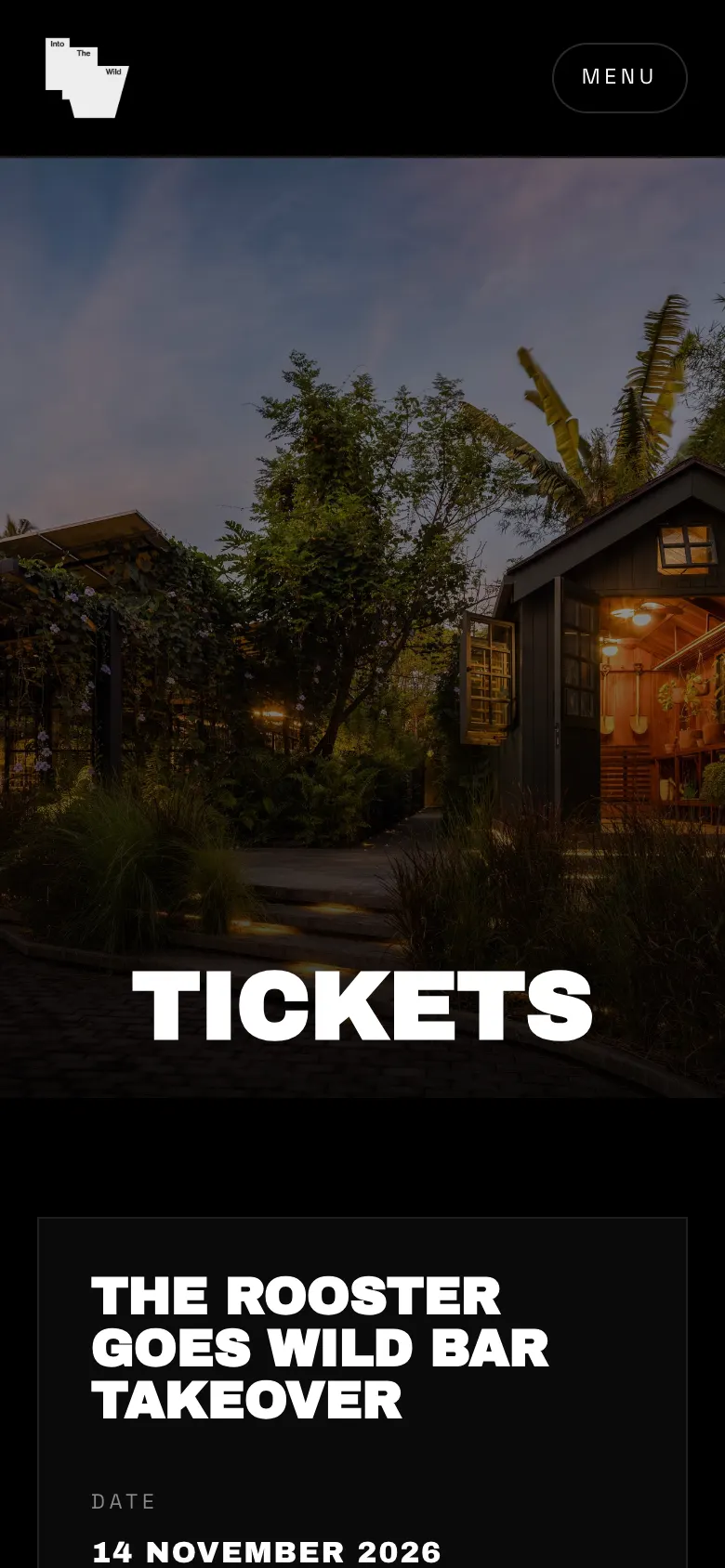
The public events are small: bar takeovers at Night Rooster and Locavore NXT, one night each. Each one gets a card on the tickets page with its date, time and venue, and a Book now button.
That button opens a WhatsApp chat with Locavore's team, with a message already written that names the event. The guest presses send, and the booking starts as a conversation with the people running the night. For one-night events, that's less to build and less to go wrong than a checkout.
How does the design carry the event?
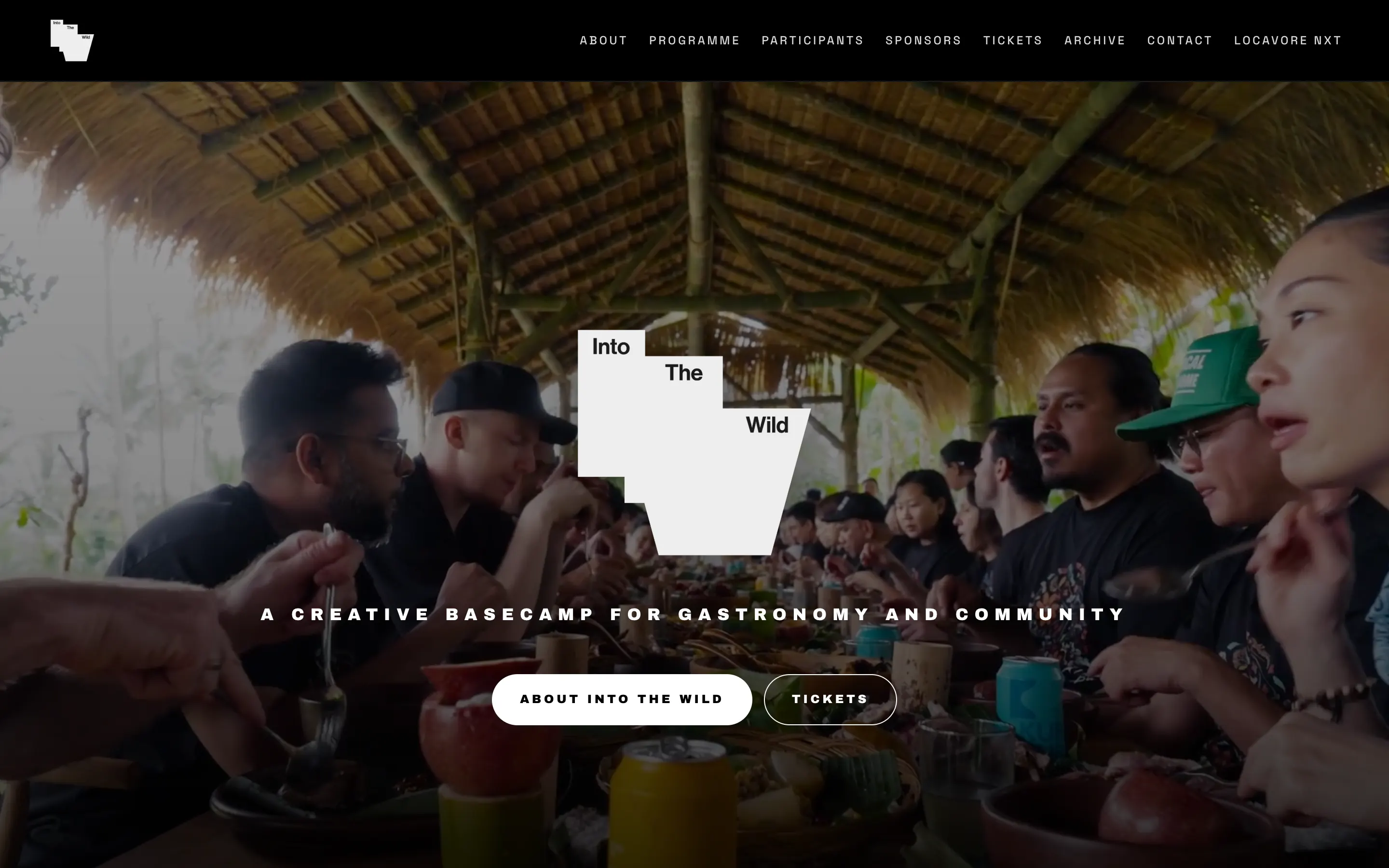
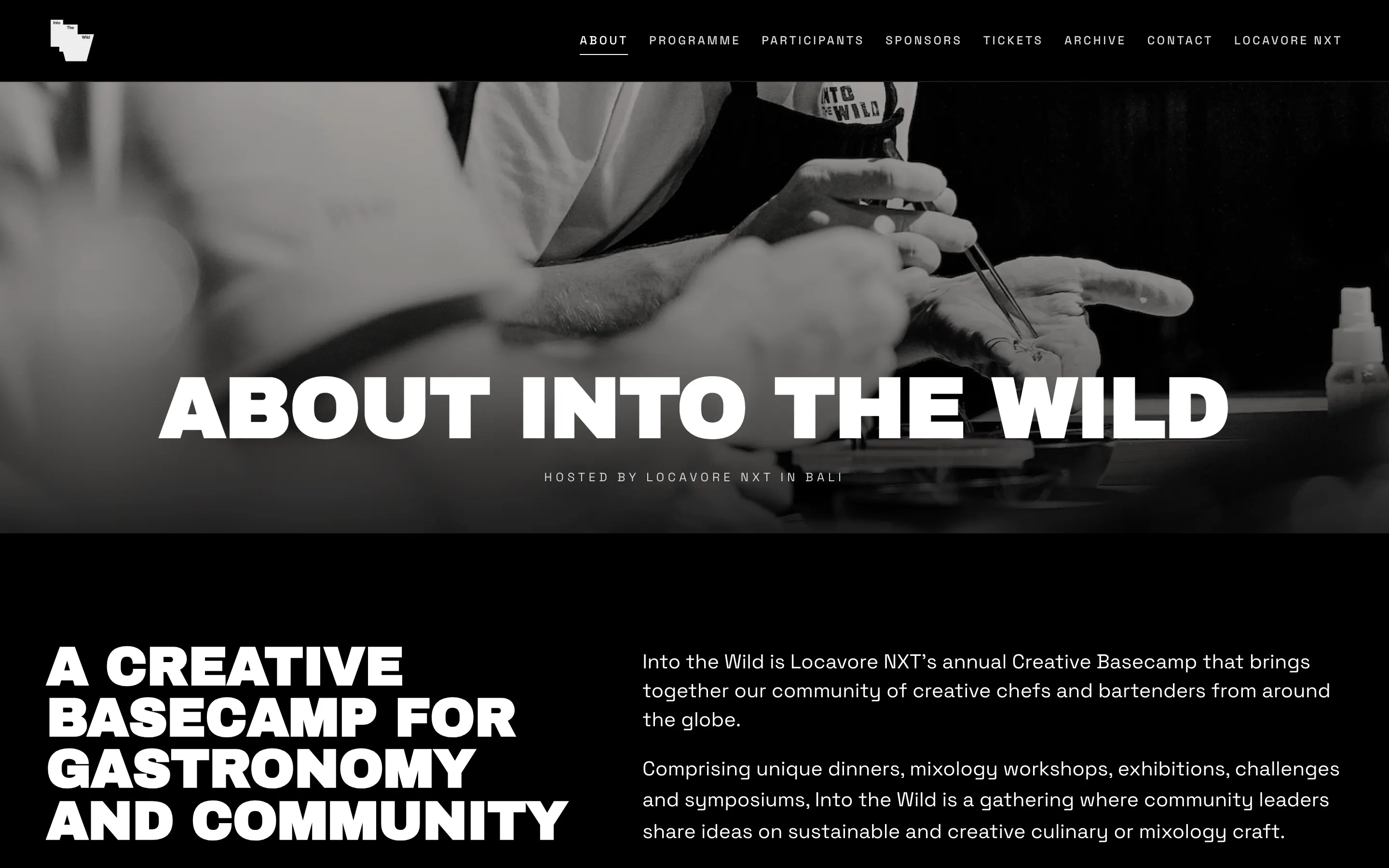
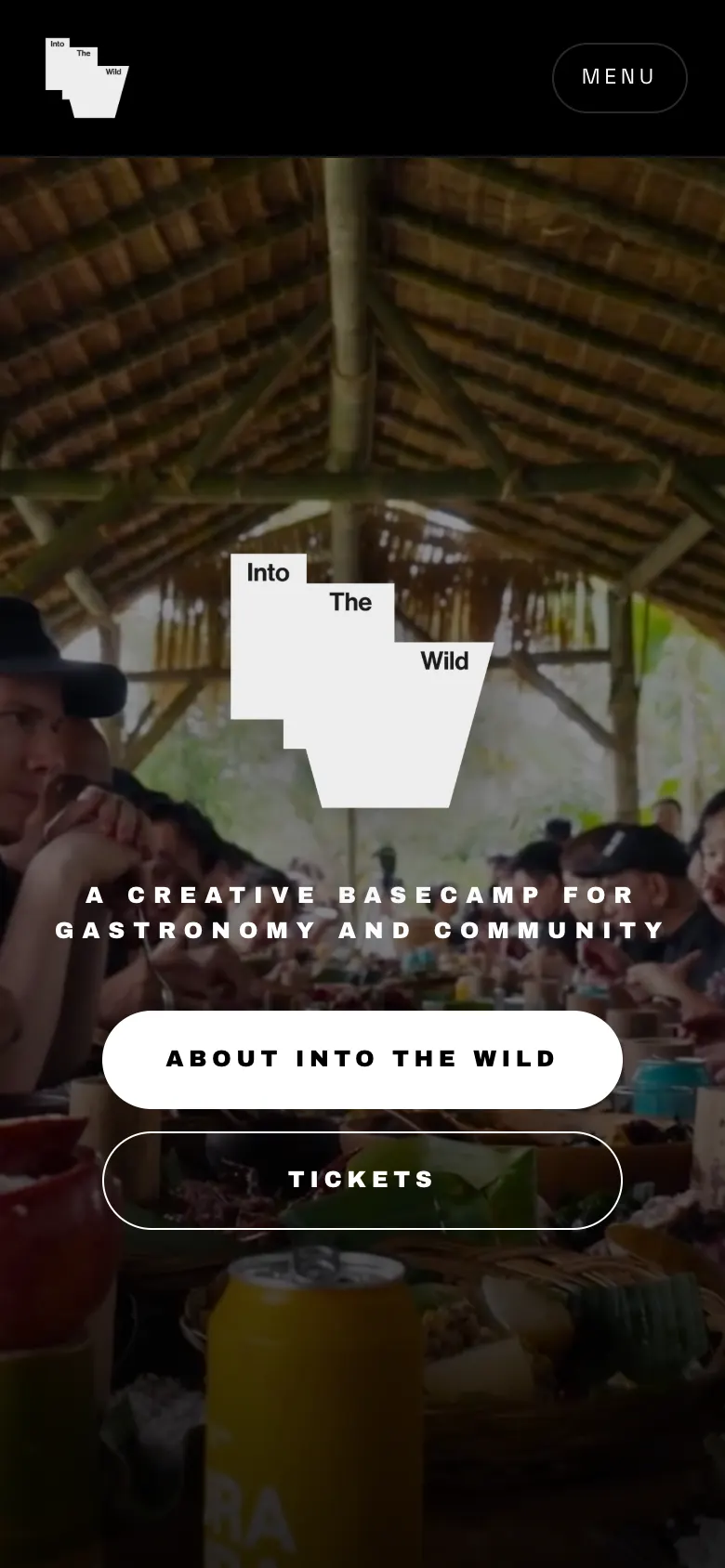
The site is black and white, with heavy, wide display type and the basecamp's own photography running full width: participants walking out through the rice fields, the long communal tables, a cabin lit up at dusk. The homepage opens on a looping video from the basecamp, under the Into the Wild mark.
The rest stays out of the way. Navigation is one row on desktop and a menu button on a phone, and the footer credits Locavore NXT as host on every page.
What does Google see?
The basics, done properly. Every page has its own title and description, the pages are server-rendered so search engines get the full text, and the bare domain redirects to the www address. In a Lighthouse run on the live homepage in November 2026, the site scored 100 for SEO and best practices and 98 for accessibility, on both mobile and desktop.
Lighthouse checks the basics. It doesn't check the extras that would make an event site stand out in search, and those are where the work is.
What would we improve next?
We measured the live site for this case study, and these are the fixes we'd make, most important first:
- The hero video. It's a 33 MB file that the browser starts downloading in full as the page opens. On a throttled mobile connection, the homepage's main content took 21.7 seconds to appear. Compressing the video to a few megabytes and loading only its first frame up front would fix most of that.
- Event structured data. Each basecamp and bar takeover has a date, a venue and a way to book, which is exactly what Google's event markup describes. Adding it makes the events eligible to appear in Google's event listings.
- Sitemap, canonical tags and social previews. The site has no sitemap or robots file, no canonical tags, and no preview image for when a link is shared on WhatsApp or Instagram.
- Smaller fixes. The homepage, sponsors and contact pages have no main heading, the participants page's heading breaks mid-word on a phone, and the pages lack a main landmark, the one accessibility point Lighthouse flags.
Into the Wild in numbers
Lab measurements of the live homepage, taken on 9 November 2026, plus counts from the site itself. Google doesn't have field data from real visitors for the site yet.
Source: Lighthouse and a Chrome DevTools performance trace run by Digics on intothewild.id. Google's guidance treats a layout shift under 0.1 as good and a largest paint under 2.5 s as good, which is why the video is first on our list.
Questions
In June 2026. The Locavore NXT website has linked to it since mid-June, and it carried the fourth Culinary Basecamp in September before the Liquid Basecamp in November.
Digics and Panduu designed and built it together, and the site's footer credits both. The event is hosted by Locavore NXT in Bali.
Each public event on the tickets page has a Book now button that opens a WhatsApp chat with Locavore's team, with a message already written that names the event. Ticket questions can also go to the reservations email on the contact page.
Yes. The homepage shows the Culinary and the Liquid Basecamp side by side and marks the one that has already happened, and finished editions move to an archive of recap videos and podcasts.
It depends on the number of pages, the content and the integrations. Our guide to restaurant website costs in Bali breaks down what drives the price, in our own euro rates.